

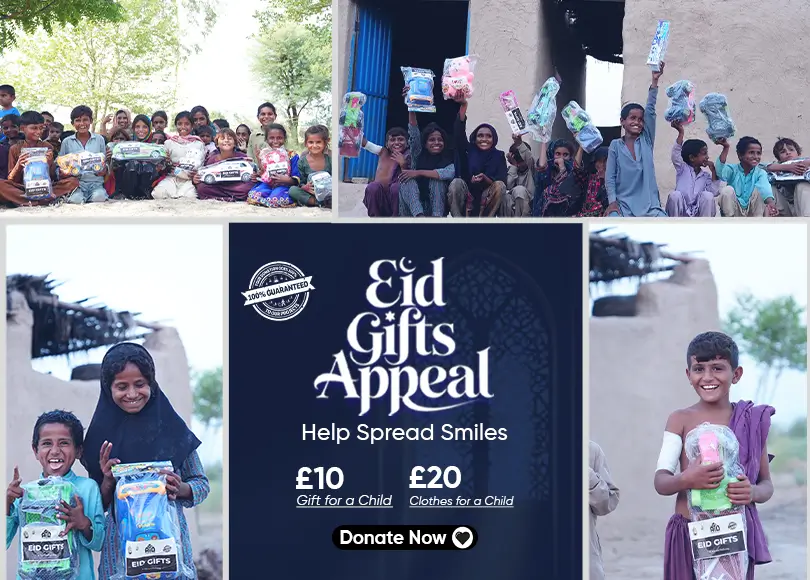
Eid Gifts
for Needy Children – Sharing Joy, Restoring Dignity
Eid is a time of celebration. Families gather. Homes are filled with laughter. And children look forward to gifts, clothes, and special moments. But for many children around the world — orphans, children of widows, and families affected by poverty or conflict — Eid passes quietly. With no gifts. No new clothes. And little reason to smile.
Providing Eid gifts for needy children is not about luxury. It is about dignity. It is about reminding a child that they are seen, valued, and remembered — even when they have nothing to give in return but a heartfelt du‘a.
The Islamic
Virtue of Giving Joy
Bringing joy to others, especially children, is deeply rooted in our faith. The Prophet ﷺ taught us to care for the poor, honour orphans, and support those in need — particularly on days of celebration.
The Prophet ﷺ said:
“He is not a believer whose stomach is filled while his neighbour goes hungry.”
— Adab al-Mufrad
“Whoever relieves a believer’s hardship in this world, Allah will relieve his hardship on the Day of Resurrection.”
— Sahih Muslim
He ﷺ also encouraged the giving of gifts:
“Exchange gifts, for it increases love among you.”
— Musnad al-Bazzar
Giving Eid gifts to needy children — whether a small present, new clothes, or food — is more than charity. It is mercy in action. It revives the Sunnah of generosity and strengthens the bonds of the Ummah on a day meant for joy.
What is
Included in an Eid Gift?
For many children, Eid morning comes and goes like any other — no new clothes, no sweets, no shoes, no celebration. But through your giving, that can change.
Your Eid gift can include:
A small gift, treat or toy — simple but filled with joy
A full clothing set and shoes — so a child can feel confident and included
Essentials that bring dignity and a sense of belonging on this special day
Whether it’s a single child or an entire group, your gift helps create memories that last — long after the wrappers are gone.

Who Needs
Eid Gifts the Most?
Your Eid gift may go to:
Orphan
An orphan who has no one to surprise them
Widow
A widow struggling to make Eid feel special for her children
Refugee
A refugee spending Eid in a tent, far from home
Family
A family that couldn’t afford food, let alone a celebration
These are people who still fast, still pray, and still make du’a with hope even as their lives remain heavy. Your gift is a reminder that they are not forgotten.
From Your
Hands to Theirs –With Love and Care
Whether it’s Gaza, Yemen, Pakistan, Afghanistan, or refugee camps across the world, your Eid gifts are delivered with care, respect, and warmth. When you give an Eid gift, it becomes a quiet form of Sadaqah. A way to share the joy Allah has given you by passing it on to someone else.
And perhaps, on the Day of Eid, as your own family celebrates, a child you’ll never meet will smile because of you. That, in itself, is reward enough.
Let the
Joy Continue Beyond Eid
Giving an Eid gift is just one moment of happiness — but the needs of the poor and vulnerable continue long after the celebration ends. If you’d like to continue spreading joy, ease and dignity in the lives of those who are struggling, you can also support:
Orphan Sponsorship:
Provide long-term care and support for a child in need
Widow Support:
Help women raising families with no provider
Food Packs:
Ease the daily hunger of families in crisis
Each act of giving is a chance to be written among those who bring comfort to the Ummah.
“Allah is helping the servant as long as the servant is helping his brother.”
— Sahih Muslim
Eid Gifts for
Needy Children FAQs
1. What are Eid gifts in Islam?
Eid gifts are a way to share joy and gratitude on Eid. While not obligatory, it’s a Sunnah to give and increase love — especially to children, the poor, and those in need.
2. Who receives the Eid gifts I donate?
Your gift is given to children in need — including orphans, children of widows, displaced families, and others living in poverty across areas like Gaza, Yemen, Pakistan, and refugee camps.
3. What is included in an Eid gift?
Depending on the option chosen, a gift may include sweets, toys, new clothes, shoes, or hygiene items — all age-appropriate and culturally respectful.
4. Can I give Eid gifts as Sadaqah?
Yes. Giving joy to others, especially on Eid, is a beautiful form of Sadaqah. You may also give on behalf of a loved one as a gift of reward.
5. Is giving on Eid a Sunnah?
Yes. The Prophet ﷺ encouraged generosity and gift-giving on Eid. It fosters love, dignity, and unity within the Ummah.
6. Can I donate Eid gifts on behalf of my children or family?
Absolutely. Many donors give in the name of their children or as a family, teaching the value of sharing joy with others during Eid.